Your work is spread across projects. Bring today's next actions into focus
TasksNet · Updated
You open several projects to find your work, then remember a personal errand from another chat. The search itself consumes the time you wanted to spend working. TasksNet combines a personal focus space with a shared project space. You can review your own next actions and return to team context when coordination is needed.
Capture without deciding everything immediately
Getting Things Done uses capture, clarification, organisation, reflection and engagement. In TasksNet, Inbox can hold actions you still need to clarify. Forward a request, enter a thought or review an AI draft, then save it. Capture gives the commitment a place before you choose its priority.
Suppose the inbox contains a travel document, a customer reply and “website”. The first two suggest actions; the third needs clarification. Ask what successful progress would look like. “Send the revised homepage text to Ben” gives you a next step you can actually finish.
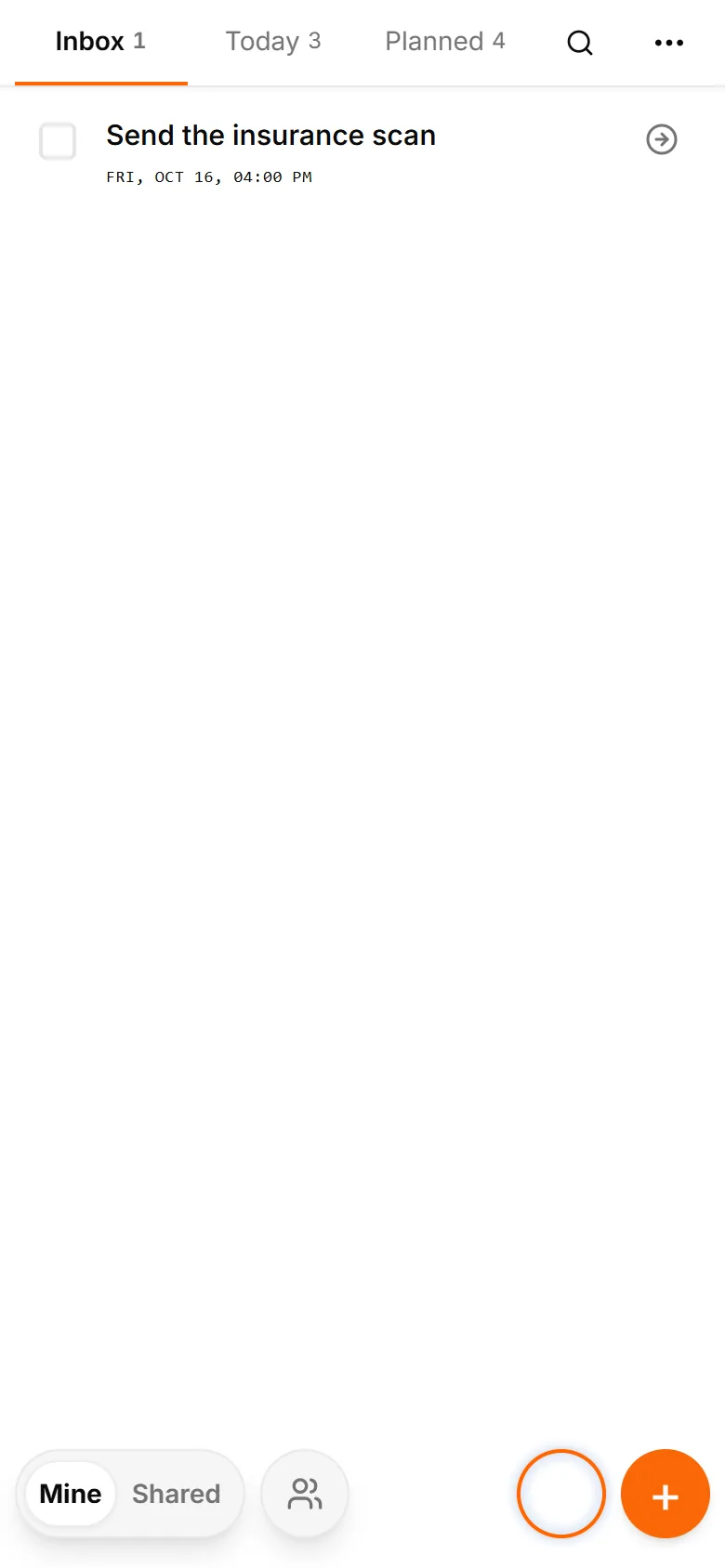
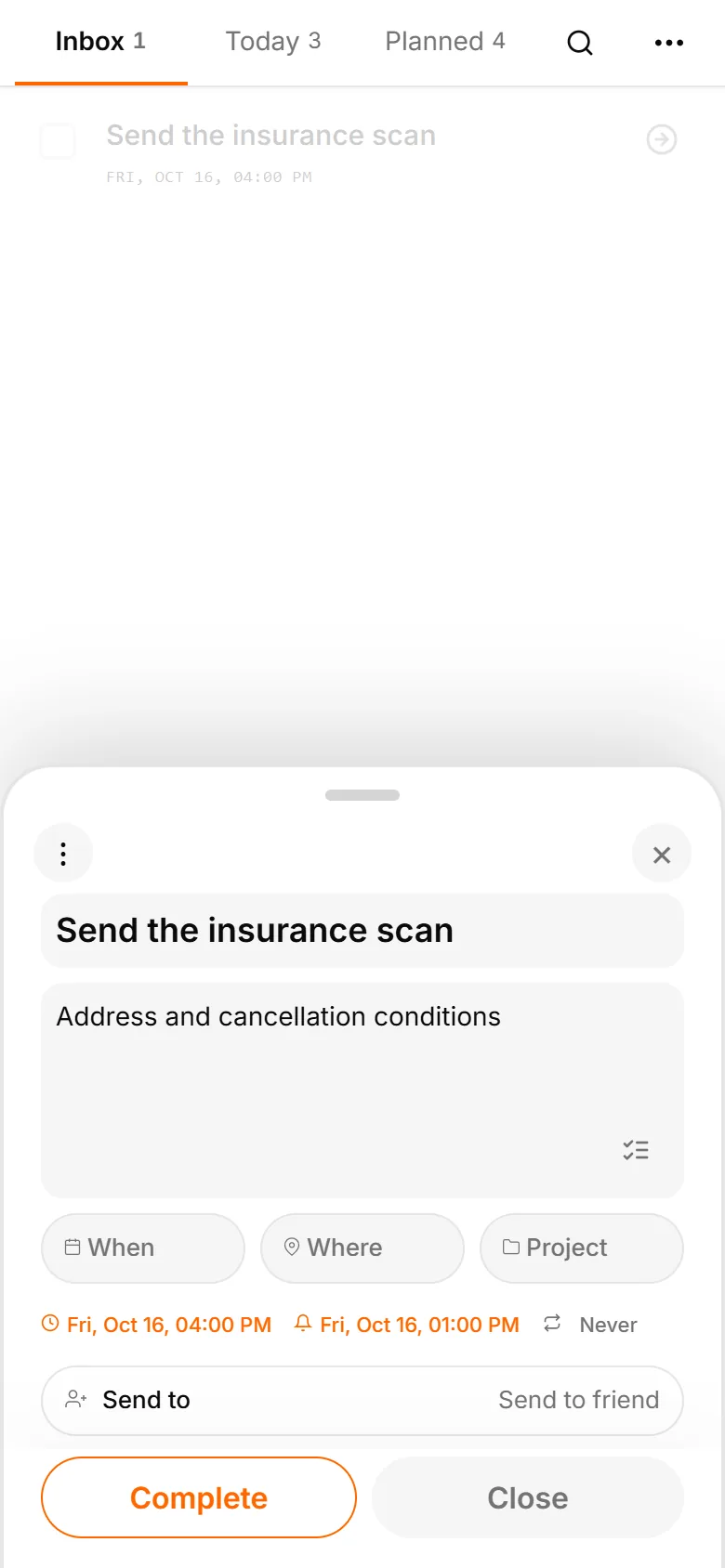
Clarify a next action and its context
Open the task and keep the next action in its title. Put supporting details in the description and use a checklist when several steps belong together. A project can describe a larger result, while its tasks explain how people move it forward.
Choose planning deliberately: today, tomorrow or this week. Set a deadline only when it expresses a real commitment. The day you intend to work and the date someone depends on are separate fields. A task that requires clarification does not become urgent just because it entered Inbox.
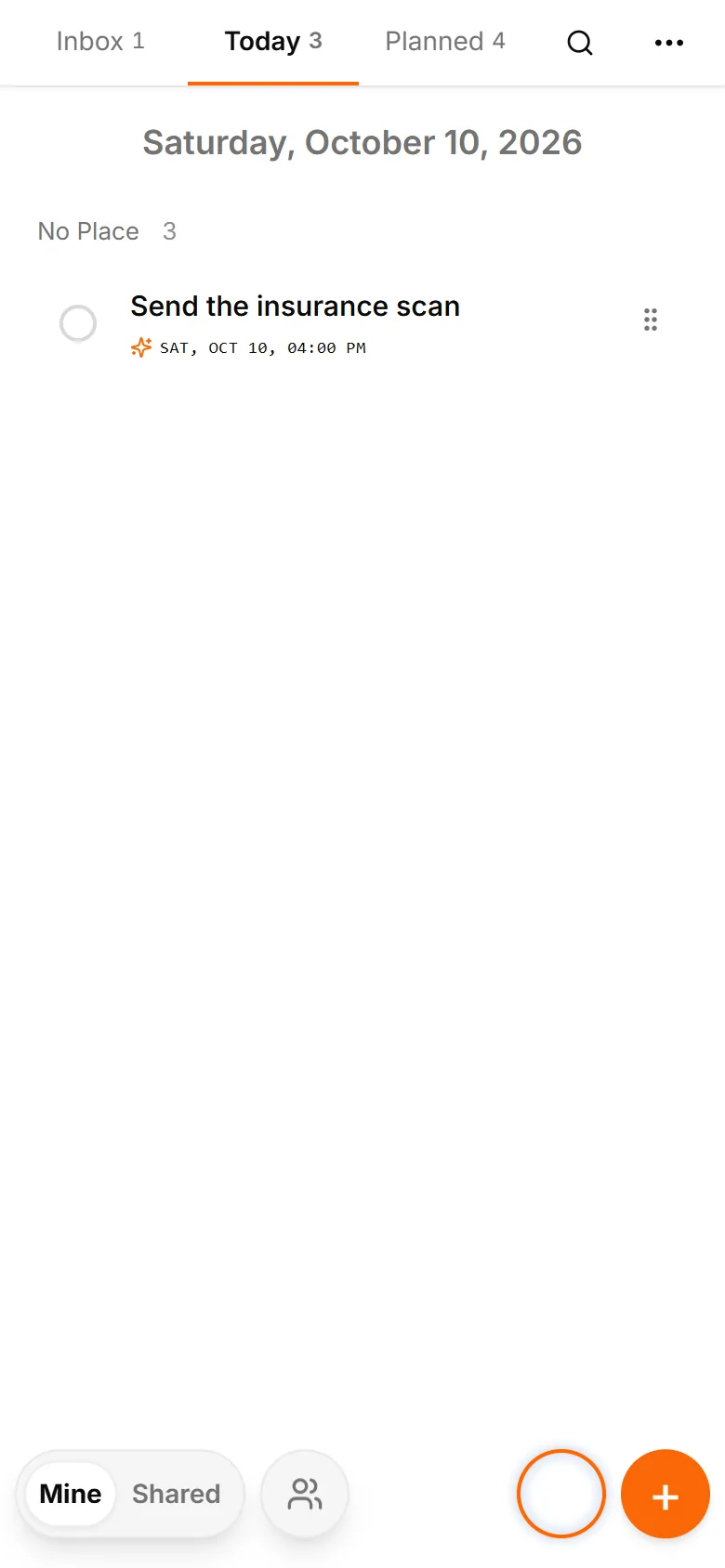
Focus on your confirmed responsibilities
Open Mine to see personal tasks together with confirmed collaborative work assigned to you. Use Today to choose a manageable focus and This week to look ahead. You do not need to visit each project just to locate your own accepted actions.
Mine does not collect every colleague's task you can inspect as a coordinator. An unassigned action or a request awaiting acceptance belongs in its shared context. Review those separately when your role is to organise the project rather than perform every step yourself.
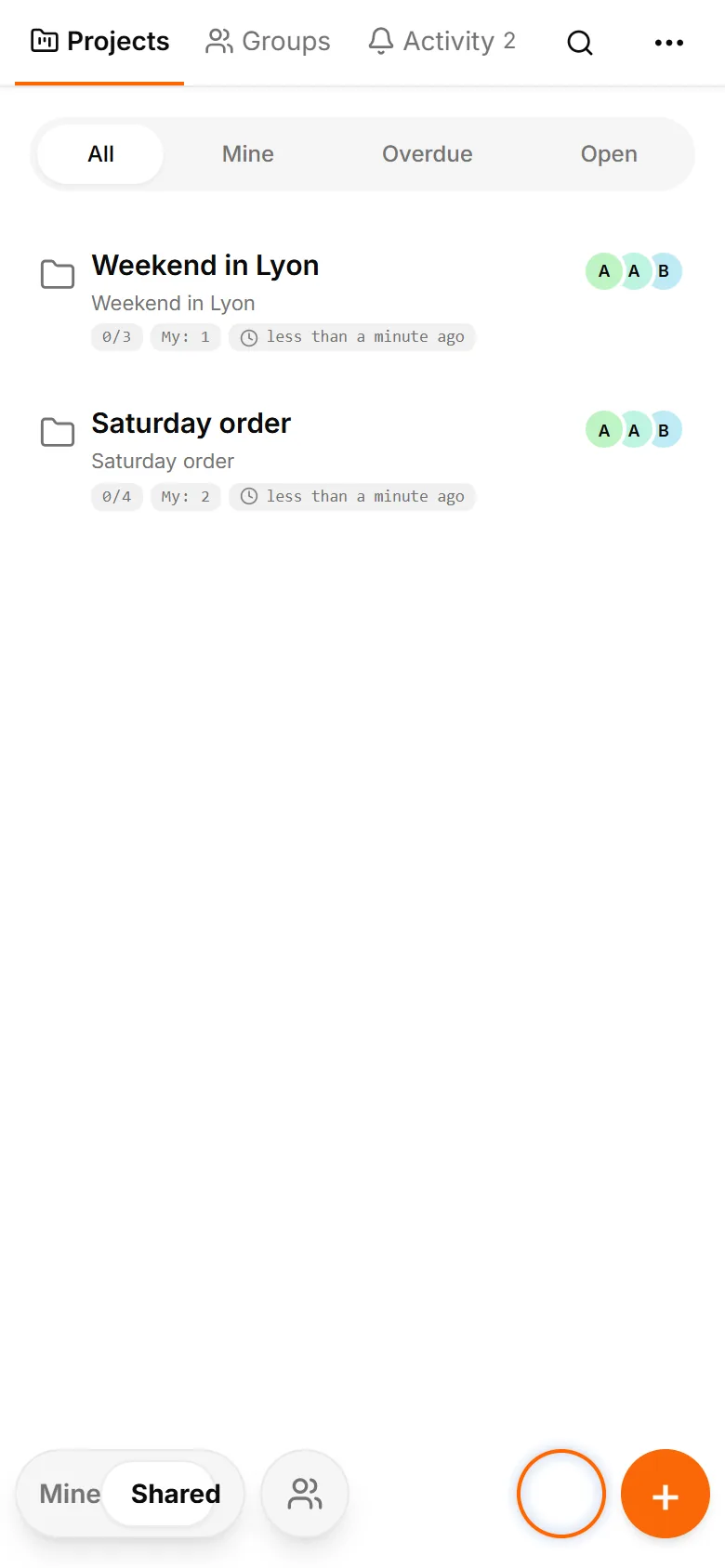
Use Shared for the common picture
Open Shared when you need projects, groups and their collaboration context. Review the trip booking with friends or the order with the team. Manage participants and responsibility there, and keep discussion beside the appropriate task. Access remains specific to each context.
This switch answers two practical questions: “What do I need to do?” and “What is happening in this project?” A coordinator still needs the second review. A personal focus view makes the first easier without replacing the common plan or hiding other people's responsibilities from authorised project members.
Reflect, then choose what to do
During a regular review, empty what you can from Inbox, mark completed actions and clarify blocked work. Ask AI for help checking the plan or proposing changes; inspect the preview before applying. Smart Deadlines can automatically raise eligible tasks' planning urgency as their deadline approaches, without changing that deadline.
TasksNet supports parts of this approach; it is not a certified GTD implementation or a substitute for your decisions. Begin with one short inbox review and three realistic actions for today. Keep the wider projects in Shared and return to them when a decision needs their context.