What if your task manager could tell you why a deadline slipped?
TasksNet · Updated
Acceptance testing was waiting on two test orders. One question to project memory surfaced Ira’s commitment to send the numbers and the lines that explain the delay.
On Wednesday morning, the lead on Project Lighthouse opens the board. The checklist is done. Sending the results to the client is on the board for Friday. In between is “Complete returns acceptance testing.” It was due yesterday, November 17. The task is still open, with a blank description and no assignee.
Who do you message first? The developer might know whether the release is ready. The tester might know how far the testing got. The client might have a new date. Everyone has a piece of a conversation that already happened. You could easily ask Lena to run another check when the next move belongs to the client.
We built project memory into TasksNet to see what happens when you ask the question in the project itself. We tried it on the live app with a Premium test account. Lighthouse was fictional and had three tasks.
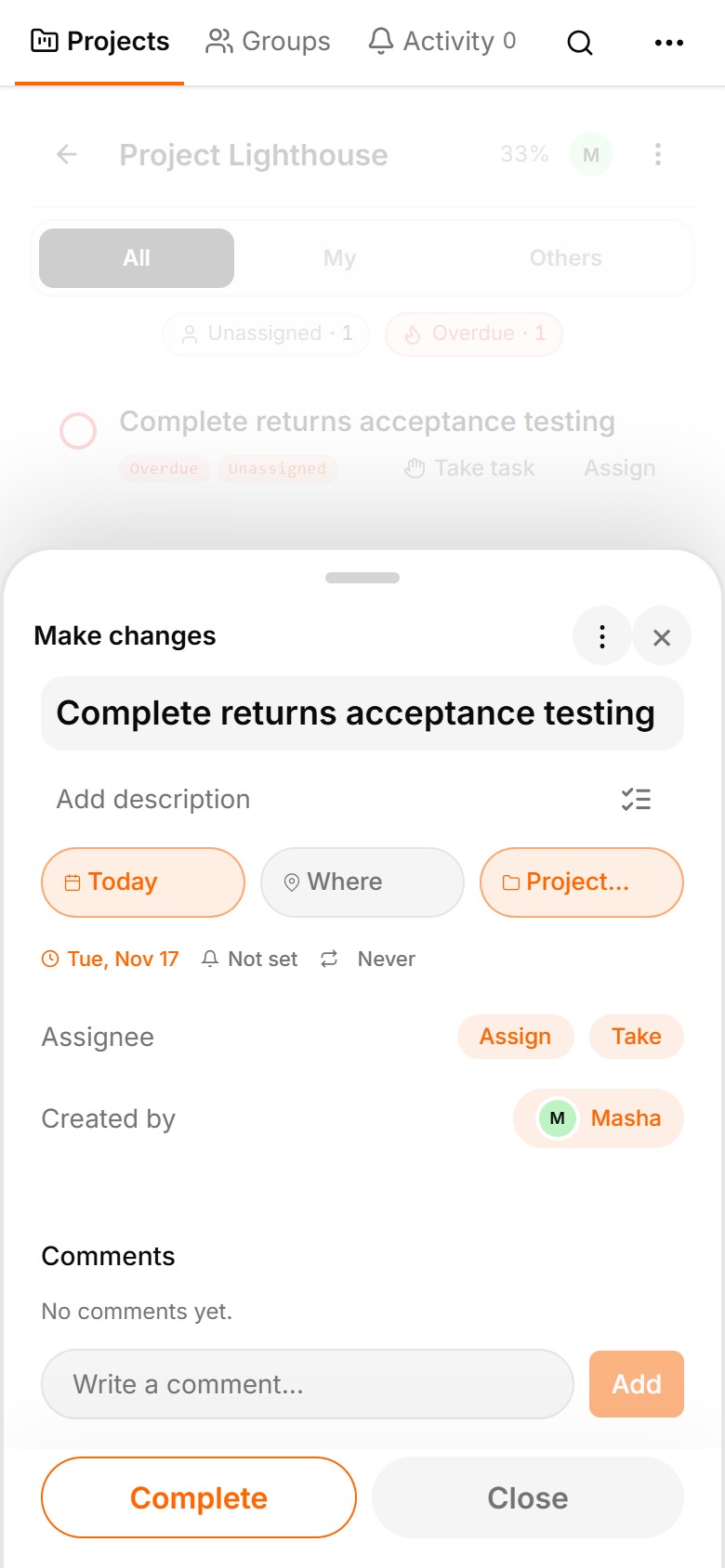
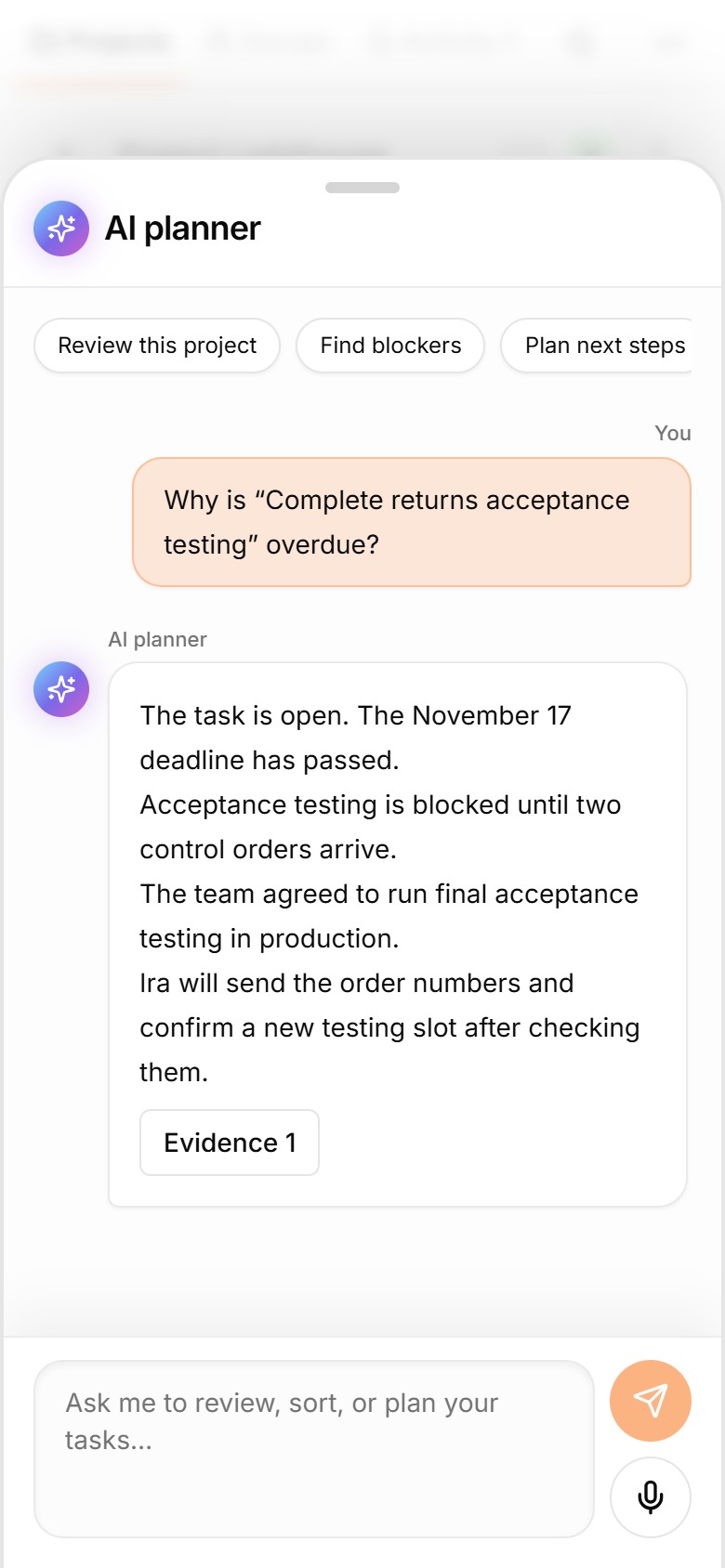
We ran the test in Russian. The screenshots show the translated question and a condensed translation of the answer in the English TasksNet interface.
“Why is ‘Complete returns acceptance testing’ overdue?”
The first time we asked, the project had no saved entries about the discussion. We then gave the TasksNet assistant eight messages inside Lighthouse. Once the relevant details were available in memory, we opened a new conversation in the same project and asked exactly the same question. The task card stayed as it was.
| Without saved context | With project memory |
|---|---|
| What you can see. The task is still open. November 17 has passed. | What you can see. The task is still open. November 17 has passed. |
| What held it up. The assistant found no matches in the memory it could access. | What held it up. The team still needed two test orders to proceed. |
| Where testing will happen. The card doesn’t say. | Where testing will happen. The team agreed to do final acceptance testing in production. |
| Who moves next. You’d have to ask the team. | Who moves next. Ira, the client contact, will send the order numbers and confirm a new testing slot after checking them. |
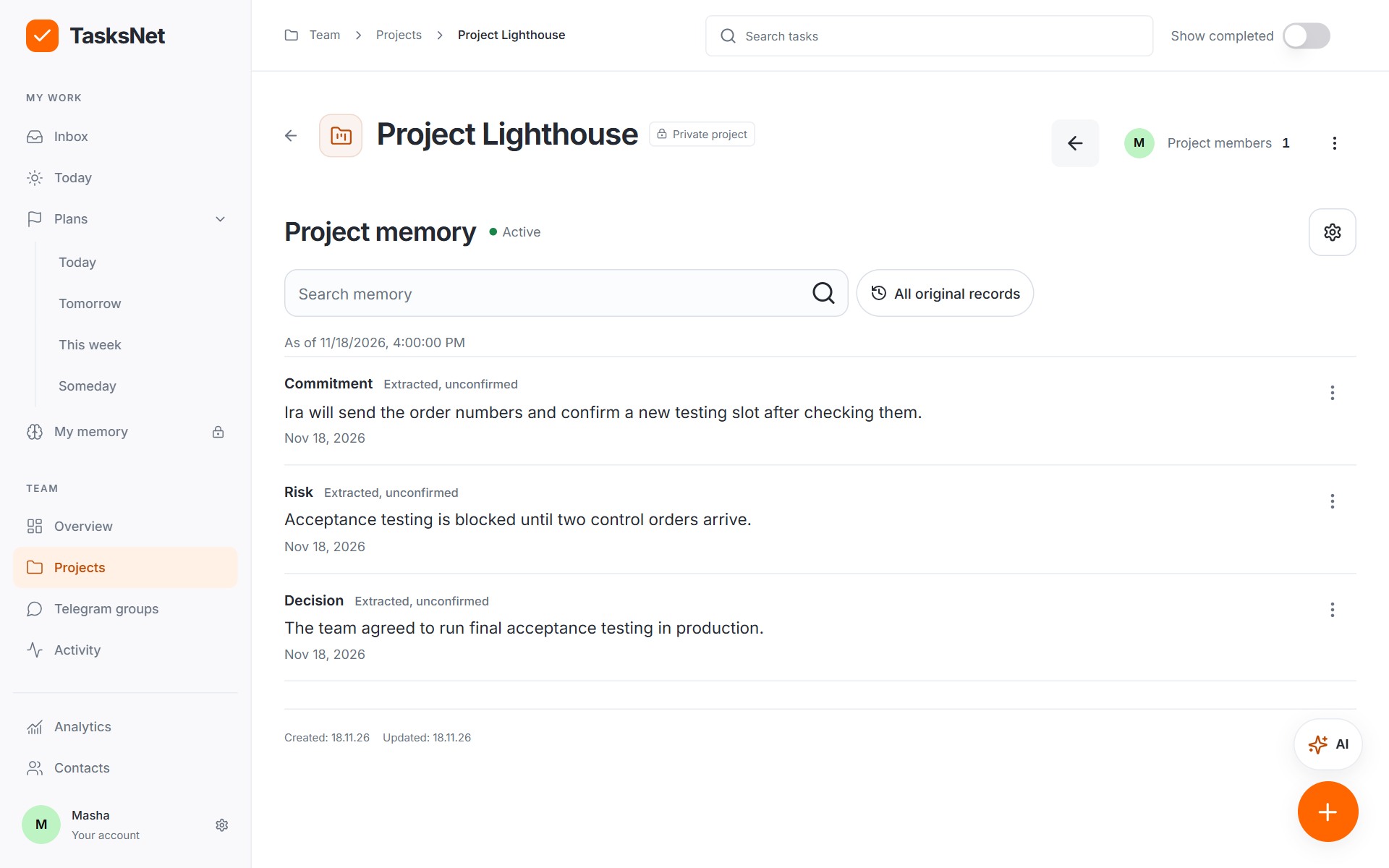
During the test, the entries from the discussion were marked “Extracted, unconfirmed.”
We asked again in another conversation, this time in different words, and got the same reason and next step. If you do need to message the client, you now know exactly what to ask for.
Where the answer came from
Lena from QA said the checklist was ready and proposed Tuesday. Oleg said the staging checks had passed and shared the decision:
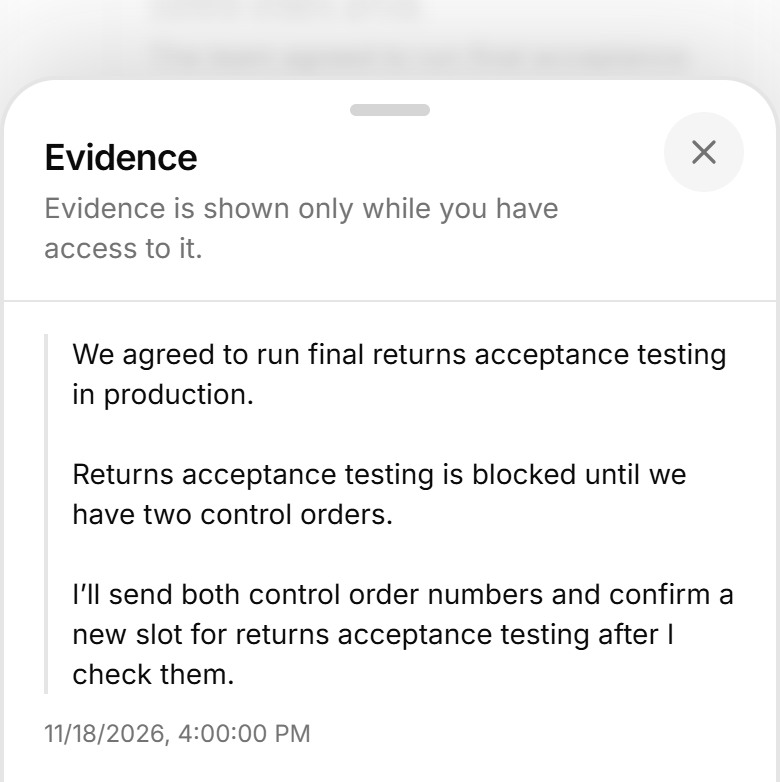
Oleg. We agreed to run final returns acceptance testing in production.
The client hadn’t confirmed November 17. Two lines explained what had to happen next:
Lena. Returns acceptance testing is blocked until we have two control orders.
Ira. I’ll send both control order numbers and confirm a new slot for returns acceptance testing after I check them.
Oleg added that no code changes were needed. Masha tied sending the results to completion of acceptance testing and kept the original deadline visible so the team could still see the delay. These are translated excerpts from the fictional discussion. The sources below the answer let us open the original lines in Evidence.
We added one more message. Lena would suggest a time after Ira confirmed the slot, and the new date was still open. The next reply flagged that it covered only part of the project memory. It named the blocker, Lena’s next step, and the open date. We could still find the production decision and Ira’s commitment in the project’s saved entries.
What project memory adds to team task management
The assistant reads the current deadline and status from the task. Project memory helps it bring back decisions, blockers and commitments from discussions shared with the assistant inside that project. Project members with memory access can review saved entries and open the sources they’re allowed to see. When a plan changes, share the latest decision in the project and check the new entry. Telegram groups have their own memory. Lighthouse used a conversation inside TasksNet.
Once the client confirms a new slot, the team can update the deadline on the board and see who owns acceptance testing. See how to manage team tasks in Telegram
Personal memory is for a different moment. It adds your usual times and details when you’re making personal tasks. Project memory helps after someone has already made the task and you need to understand what happened. Read the personal memory case
Which card on your board makes you want to ask, “What happened here?” Share one recent agreement with the project assistant. In a new conversation, ask about it and open the source. If you can tell who’s waiting for what, you already know your next move.